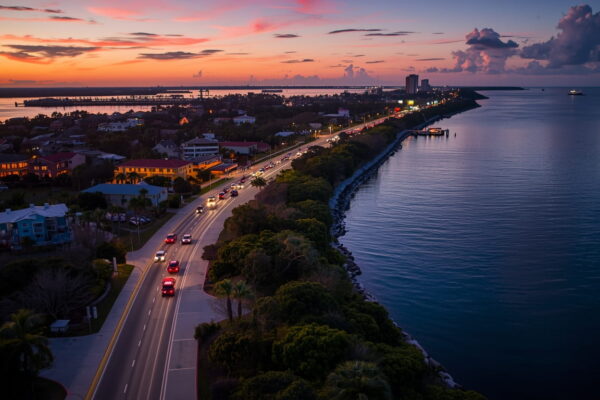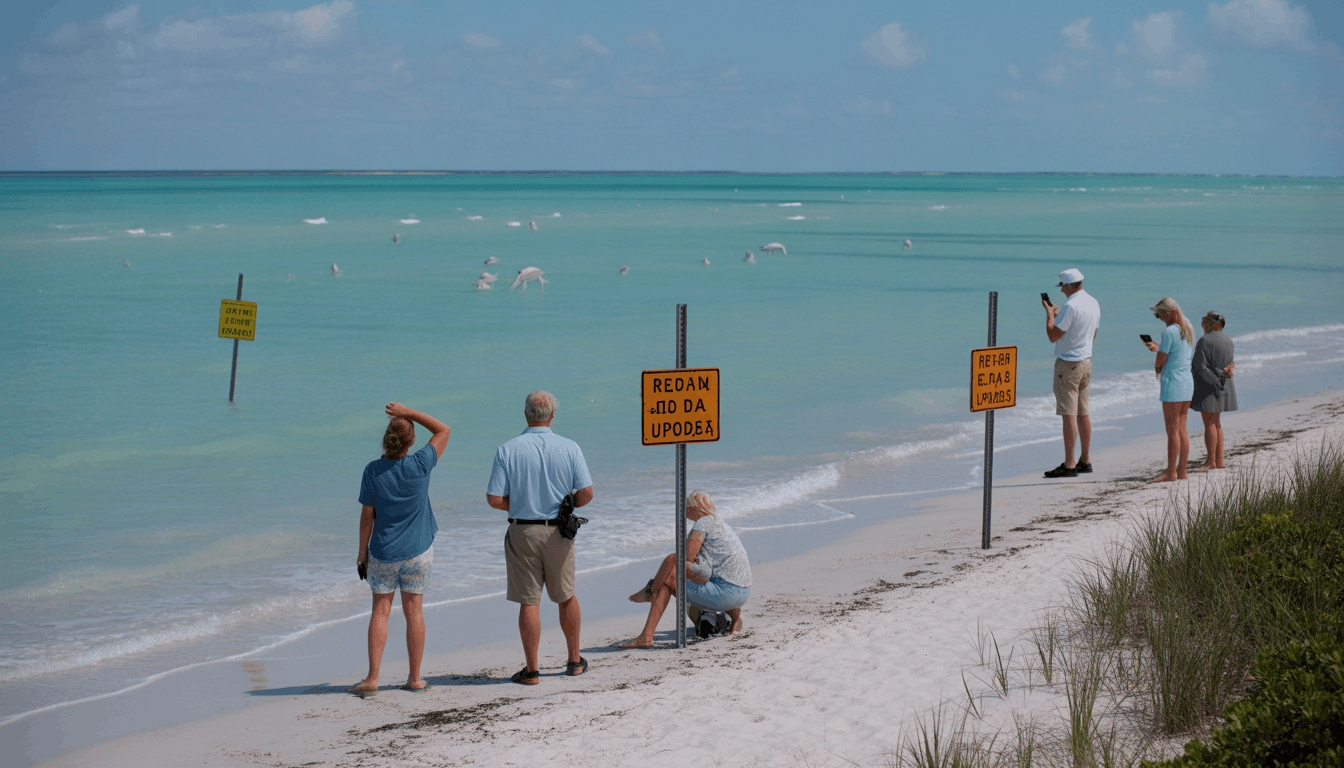
The beaches along the Gulf of Mexico between Fort Myers and Naples are cautiously celebrating April 2026, but the latest news on the red tide indicates the danger is not over. Though the present rates are low, new information points to new environmental pressure and subtle blows to the tourism economy of the region with the warming of the Gulf waters into the summer.
Present Red Tide Conditions in Southwest Florida 2026
Based on the latest Florida Fish and Wildlife Conservation Commission sampling through the beginning of April, the red tide organism Karenia brevis has been found only at background levels in isolated offshore locations in Monroe County.
There have been no reports of widespread fish kill or respiratory irritation along Collier, Lee or Sarasota beaches in recent weeks. Nevertheless, the authorities emphasise that the situation may change rapidly as winds and currents vary, particularly as water temperatures increase over the next few months.
Emerging Stresses on the Marine Ecosystems
Red tide is increasingly becoming a part of coastal life in Southwest Florida, even at low levels, according to scientists. According to recent research, there are longer-lasting blooms that create a lasting strain on sea life, including manatees, dolphins and shellfish beds.
The number of dead fish sightings may not be high at the moment; however, nutrient runoff from the previous storms is still contributing to the growth of algae offshore. According to local conservation groups, the repetition weakens reef systems and seagrass meadows, which sustain the entire food chain, and the effect is a slow-burning phenomenon that extends beyond the dramatic fish kills.
The economic shockwave is clear. Cape Coral, Sanibel, and Naples are all experiencing reluctance to make early-season reservations as tourists consult red tide forecasts before making beach vacation reservations. Some families are staying away even without the water discolouration being visible, because of the fear of respiratory irritation or even cancelled fishing charters.
Local entrepreneurs believe that the what-if attitude is already reducing the number of spring tourists by several percentage points in comparison with the previous year. One bad headline can cancel dozens of bookings, according to beachfront stores and eco-tour operators, whether it’s reserving a paddleboard or a sunset dinner cruise.
Looking Ahead: Research Gives New Hope
The good news? Efforts are underway to create innovations. The University of South Florida researchers are experimenting with new materials that can decelerate the growth of the bloom in laboratory conditions and provide a possible weapon for future seasons.
These are in addition to the continuous water-quality enhancement and more accurate water-quality forecasting applications expected to safeguard the environment as well as the $2-billion-plus tourism engine that drives Southwest Florida.
In the meantime, it is evident that the local leaders have a message: stay informed by reviewing official reports on beach conditions, and have fun in the Gulf responsibly. As the red tide update 2026 indicates primarily clear waters with new underlying stress, early warning is the most effective defence to healthy beaches and an excellent visitor season in the future.
Families intending to visit Southwest Florida over the summer are encouraged to check the situation weekly and patronise local businesses that are determined to find a long-term solution.