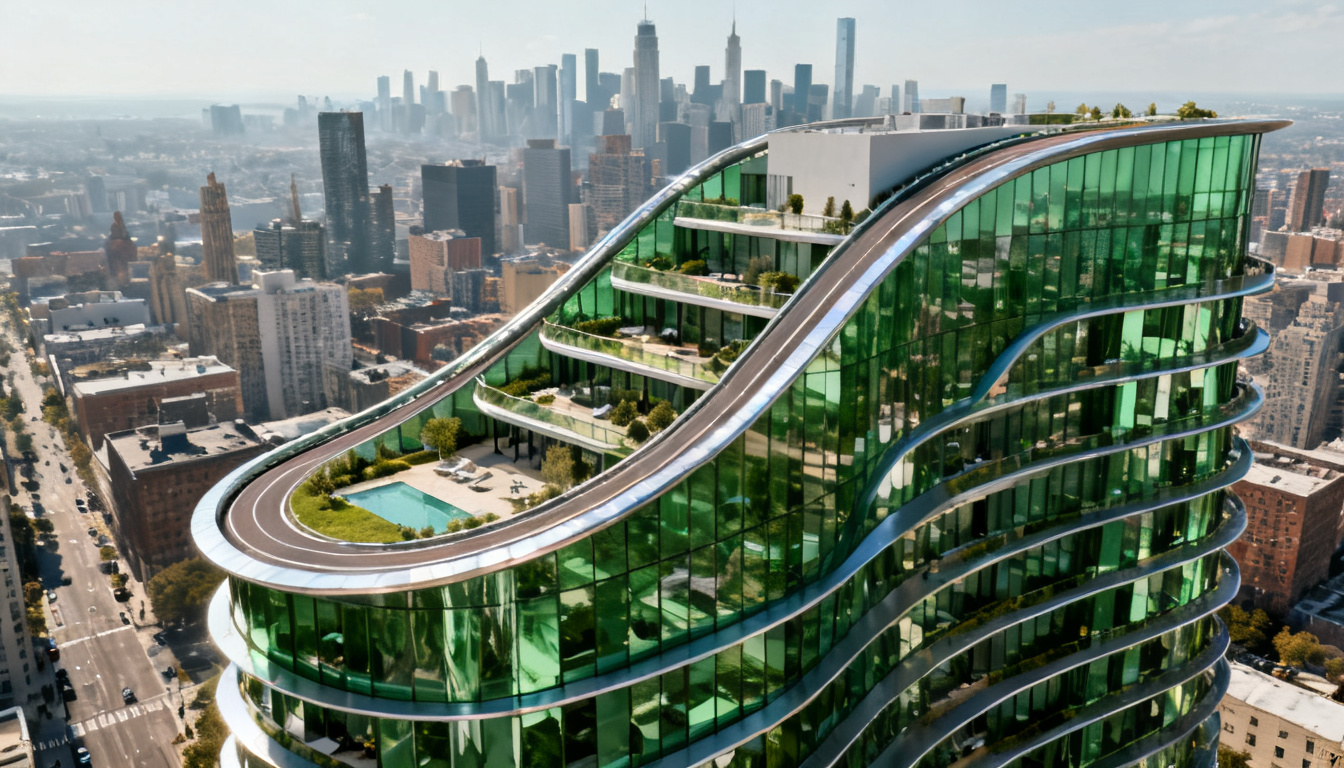
On a clear Tampa Bay morning, there’s a moment when you’re standing someplace along Central Avenue and notice that the skyline has changed while you weren’t looking. When the first inhabitants of The Residences at 400 Central started taking the elevator to levels that had only been Florida sky a few years prior, that moment finally arrived in late 2025. At 515 feet, the skyscraper completely rewrites the sentence rather than merely altering the St. Petersburg skyline.
For a $400 million project, the history of 400 Central is rather intimate. Red Apple Group CEO and Greek-born New York millionaire John A. Catsimatidis Sr. didn’t come to St. Pete with a cold calculation about migration trends or Sun Belt demographics.
He has a deeper and more ancient bond with the city than that. Margo, his spouse, is a St.The family, who were originally from Petersburg, had been coming here for more than 40 years before an empty 2.3-acre block on Central Avenue began to resemble a duty rather than a lost chance. The fact that he planned to reserve a penthouse for himself, not as a gesture but as a declaration of intent, has an almost endearing quality. He is constructing the home he genuinely desires.
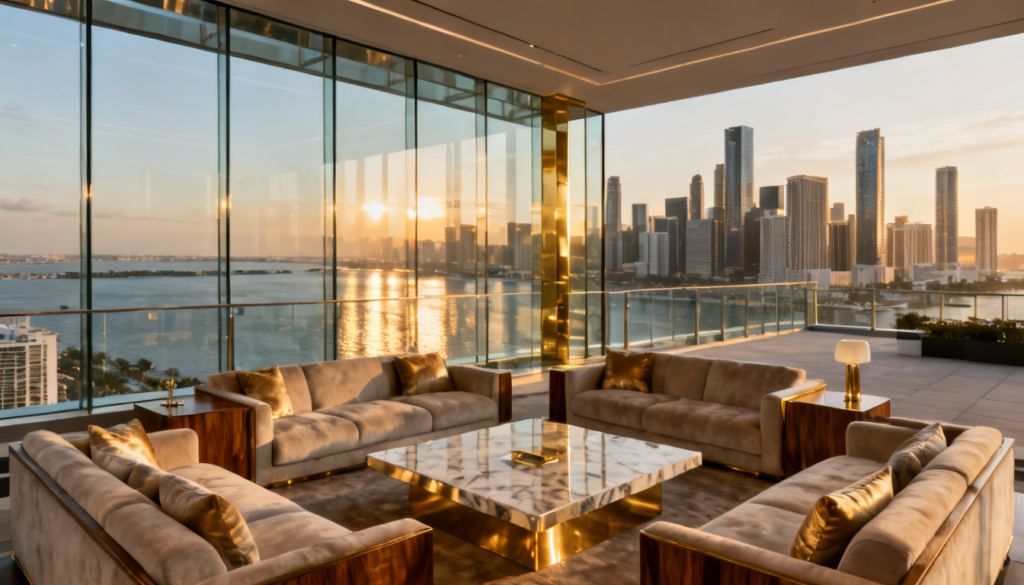
Bernardo Fort-Brescia of Arquitectonica, a Miami studio that has created some of the most iconic structures in South Florida and Latin America, designed the skyscraper. Fort-Brescia’s natural tendency is to be dramatic without being overly theatrical, which fits St. Pete’s unique confidence. With floor-to-ceiling glass, wraparound terraces, open-concept interiors with 10-foot ceilings, and natural light that makes hardwood floors gleam, the finished building is remarkable. Italian tiling lines the spa-style bathrooms. The kitchens are designed for real cooks. Little things, but the correct ones.
It’s difficult to ignore how purposefully the structure rejects the notion of a sealed, self-sufficient bubble. At street level, 400 Central expands into 60,000 square feet of carefully chosen dining and retail space, with café seating extending onto 4th Street and Central Avenue.
In order to create something that may truly fit on a St. Pete block rather than a sterile luxury avenue, the developers were quite precise about wanting local, regional, and national tenants in a careful balance. Although it’s yet uncertain if that goal will materialise after tenants sign leases, the aim is sincere. According to Catsimatidis himself, the city’s current mood should be complemented rather than replaced. Saying that is simpler than really doing it. However, the instinct is correct.
Key Information: The Residences at 400 Central
| Detail | Information |
|---|---|
| Project Name | The Residences at 400 Central |
| Location | 400 Central Avenue, Downtown St. Petersburg, Florida |
| Developer | Red Apple Real Estate (Red Apple Group) |
| Developer CEO | John A. Catsimatidis Sr. |
| Architect | Bernardo Fort-Brescia, Arquitectónica (Miami) |
| Interior Design | Vincent Celano, Celano Design Studio (New York) |
| General Contractor | Suffolk Construction |
| Height | 515 feet (46 stories) |
| Total Units | 301 luxury condominiums |
| Unit Range | 1,277 to nearly 4,000 sq. ft. |
| Price Range | Starting at $1 million; penthouses up to $5 million+ |
| Total Investment | $400 million |
| Development Size | 1.3 million sq. ft. (2.3-acre city block) |
| Office Space | 45,000 sq. ft. Class A |
| Retail Space | 60,000 sq. ft. ground-floor retail & restaurants |
| Parking | 900 spaces |
| Status | First residents moved in (December 2025); upper floors under construction |
| Sales Agent | Michael Saunders & Company |
| Reference Links | Official Website – Residences at 400 Central · St. Pete Rising Coverage |
At this stage in the discussion of luxury condos, it is envisaged that the amenity package would be substantial. With a resort-style pool, a putting green, a bocce court, an outdoor kitchen, and a fire pit, the seventh-floor terrace is more than 16,000 square feet. Higher up is the more intriguing offering.
The Sky Lounge Observatory, a glass-enclosed space with a rooftop terrace above it, is located on the 46th level, which is essentially the top of the highest residential building on Florida’s Gulf Coast. From here, the vista is uninterrupted, extending from Tampa Bay to the Gulf of Mexico. It appears to be something you might find at a hotel in Singapore or Dubai on a clear day. However, you would reside here. Locals do.
A specific tale about demand was conveyed via sales. Reservations exceeded $150 million in the first ninety days following the sales gallery’s opening in late 2021. Total sales had exceeded $250 million by the time construction reached the eleventh story. Before a single tenant had moved in, almost 250 of the 301 units were under contract; prices for the highest penthouses ranged from $1 million to over $5 million. A $5.23 million flat on the 43rd level was sold. According to Catsimatidis, the purchasers were mostly from Florida, the Northeast, and the Midwest, familiar regions where people have changed their choices about where and how to live since 2020.
400 Central seems to be a part of a larger transformation taking place throughout Florida’s Gulf Coast. The Ritz-Carlton Residences at Estero Bay is being built on 500 acres of beachfront property near Naples. Boutique hotel-condo hybrids are being added to Sarasota.
Long eclipsed by Miami’s more ostentatious story, the Gulf Coast is grappling with its own version of the urban luxury dilemma: what does a city truly owe those who want to live downtown, high up, and spend seven figures for the view? Co-working areas, boardrooms, a theatre lounge, 45,000 square feet of Class A offices, and a front desk staffed around the clock are all part of 400 Central’s proposed solution. Depending on your personality, living a whole life in one building might either seem free or quite hermetic.
There was some conflict with the project. Last year, a storm caused a construction crane to crash into an adjacent office building, delaying the deadline by several months. It was the type of setback that journalists and construction teams deal with, but it also served as a reminder that constructing a 46-story glass skyscraper on Florida’s Gulf Coast is a particular kind of gamble.
Although they don’t seem to be enough to deter luxury purchasers, climate, insurance costs, and storm exposure are becoming increasingly important factors to consider when making structural and engineering decisions. The engineering challenges of constructing the tallest building in Pinellas County were addressed with minimal drama by Suffolk Construction, which has worked on projects such as the guitar-shaped Seminole Hard Rock expansion in Tampa.
In the end, 400 Central is a calculated wager that St. Petersburg will become a city where downtown high-rise living carries the same weight as it does in Chicago, Washington, or coastal New Jersey, at least for the time being, while the upper floors are still being completed and the first residents are still learning which elevator is fastest. That wager is not guaranteed. Throughout Florida’s history, cities like these have been quickly overshot after being undervalued.
However, there is something unique about this project: the developer’s penthouse on a higher floor, the retained dedication to a street-level shop that truly faces outward, and the preserved ancient clock from Central Avenue, placed at the base of the tower. From the street, it still seems like 400 Central is more about a man’s love letter to his wife’s city than it is about real estate economics. It is possible for both to be true.